

Laser Belly Fat Removal Options: Costs, Candidacy, and Results

Wanting a flatter-looking stomach does not always mean choosing major surgery. Laser belly fat removal options available in Canada fall into two broad categories: non-invasive laser fat-cell reduction and minimally invasive laser lipolysis....
Loading related searches
...Neither approach is a replacement for overall weight management. They are intended to address localized fat and improve body contour.
Non-invasive laser lipolysis
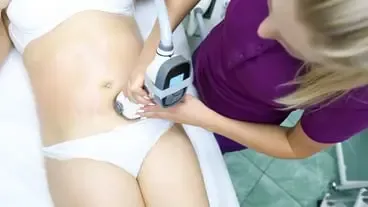
Non-invasive laser lipolysis uses controlled laser energy to target localized fat cells without anesthesia and with minimal downtime. SculpSure is a supported example of this type of laser-based treatment. Reported treatment claims describe up to 24% reduction of targeted fat cells after one session, but this figure is not a guarantee for every patient.
Results are gradual rather than immediate. They typically appear within three to six months, with optimal improvement reported around 12 weeks. Maintaining a stable weight is important for long-term results. Treatment time, candidacy, and the number of sessions should be confirmed during a clinical consultation.
Laser-assisted liposuction
Laser lipolysis may also be minimally invasive, but the supplied evidence does not establish the specific surgical steps, anesthesia requirements, recovery period, or result timing for laser-assisted liposuction. It should therefore be evaluated separately from non-invasive treatment when comparing invasiveness, risks, price, and expected contour changes.
| Comparison point | Non-invasive laser lipolysis | Laser-assisted liposuction |
|---|---|---|
| Invasiveness | Non-invasive | Minimally invasive form of laser lipolysis |
| Incisions | Not required for the non-invasive approach | Specific incision details are not established here |
| Anesthesia | Not required | Anesthesia details are not established here |
| Fat treatment or removal | Targets localized fat cells with laser energy | Surgical fat-removal method is not established here |
| Downtime | Minimal downtime | Recovery details are not established here |
| Result timing | Gradual results, commonly within three to six months, with optimal improvement around 12 weeks | Timing is not established here |
| Typical purpose | Localized fat reduction and body contouring | Surgical contouring purpose is not established here |
The appropriate comparison depends on the amount and location of localized fat, skin elasticity, health status, and age-related recovery considerations. A consultation can clarify which details apply to an individual treatment plan, rather than treating a reported result or general treatment category as a promise.
How to Choose Stomach Fat Reduction by Age and Candidacy
Two people with the same stomach concern may still discuss different treatment plans. The consultation should consider the person’s body-contouring goals, skin quality, health information, expected recovery and whether the proposed treatment is non-invasive or minimally invasive. Age alone does not provide enough information to determine candidacy.
Laser lipolysis is used for targeted fat reduction, not as a replacement for healthy weight management. Long-term results depend on maintaining a stable body weight. Non-invasive laser lipolysis requires no anesthesia and has minimal downtime, while a clinician must explain the requirements and recovery for any minimally invasive option.
Ages 20-40 and 40-60
Adults in these age ranges may be considering treatment for fat that remains in a specific area despite their usual weight-management efforts. The consultation should separate contour refinement from weight loss and set realistic expectations about the result. Skin quality and stable body weight also belong in the discussion, since maintaining weight supports longer-term results.
Ask whether non-invasive laser lipolysis is appropriate or whether a minimally invasive approach is being considered. For the non-invasive option, no anesthesia and minimal downtime are part of the treatment profile. Results typically develop over 3 to 6 months, with optimal improvement around 12 weeks, so the expected timeline should be clear before treatment begins.
Ages 60-70 and 70-80
Older adults should receive an individualized medical review before choosing between a non-invasive and minimally invasive laser-based option. The discussion can include skin laxity, general health, medications, mobility, smoking or nicotine use, and the level of support available during recovery. Less elastic skin may affect the contouring goal, so skin quality and the desired degree of refinement should be addressed directly with a qualified Canadian clinician.
Laser lipolysis may be non-invasive or minimally invasive. The non-invasive form avoids anesthesia and has minimal downtime, which may be relevant when recovery expectations are a priority, but age does not determine suitability by itself. The clinician must decide whether the person’s health information, goals and treatment expectations fit the proposed procedure.
| Age range | Likely candidacy considerations | Skin-elasticity concerns | Recovery priorities | Questions to raise during consultation |
|---|---|---|---|---|
| 20-40 | Localized contour refinement, stable weight and realistic goals | Discuss current skin quality and the desired contour | Compare minimal downtime with the recovery for a minimally invasive option | Is the goal fat reduction rather than weight loss, and which approach is being proposed? |
| 40-60 | Confirm stable weight, general suitability and the area to be treated | Ask how skin quality may affect the expected contour | Clarify anesthesia, downtime and the 3-to-6-month result timeline | Would non-invasive laser lipolysis meet the contouring goal? |
| 60-70 | Review health information, medications, mobility and expectations | Discuss possible skin laxity and the amount of refinement sought | Plan around the person’s recovery needs and available support | Is the non-invasive option suitable, or is a minimally invasive procedure being considered? |
| 70-80 | Require an individualized clinical review rather than relying on age alone | Examine whether skin quality aligns with the expected result | Discuss anesthesia, downtime, mobility and recovery support | Which health factors and medications must be reviewed before treatment? |
Shared candidacy checks should include:
- A clearly defined area of localized fat to address
- A stable body weight
- Good general health information for the clinician to review
- Realistic expectations about contour refinement rather than weight loss
- Skin quality and elasticity
- Smoking or nicotine status
- Whether anesthesia and the expected recovery fit the person’s circumstances
What Does a Belly Fat Removal Price Usually Include?
A quoted Belly Fat Removal Price needs to be considered alongside the treatment being offered. SculpSure is a laser lipolysis system, and non-invasive laser lipolysis requires no anesthesia and has minimal downtime. These details describe the procedure, but they do not establish what a clinic’s quoted fee includes.
Treatment results also develop over time. A single SculpSure session removes up to 24% of targeted fat cells, while results typically appear within 3 to 6 months, with optimal improvement around 12 weeks. Ask the clinic to explain how the quoted price relates to the planned treatment and when results are expected, rather than judging affordability from the session alone.
Stable weight is required to maintain long-term results. As a result, the price of one treatment should be considered together with the treatment plan and the possibility that more than one session could be discussed.
 Laser Belly Fat Removal Options: Costs, Candidacy, and Results
How Much Can Belly Fat Removal Cost in Canada Overall?
The Belly Fat Removal Cost depends on whether you are pricing one non-invasive laser session, a broader treatment plan, or a surgical procedure. Non-invasive laser lipolysis requires no anesthesia and has minimal downtime, but those features do not establish a Canadian price. A single SculpSure session can remove up to 24% of targeted fat cells, while visible results typically develop over three to six months, so the number of sessions and the expected timeline should be discussed before treatment.
A reliable Canadian comparison should separate the price of the treatment itself from costs that might apply to a surgical procedure. The available information does not establish Canadian dollar ranges for laser treatment or liposuction, nor does it confirm OHIP coverage or the availability of financing plans. Ask the provider for a written quote rather than relying on a headline figure.
| Treatment option | Price basis to confirm | Supported treatment details | Payment and coverage questions |
|---|---|---|---|
| Non-invasive laser lipolysis | Price for one session and whether additional sessions are proposed | No anesthesia and minimal downtime | Ask about the total treatment-plan price, OHIP, and financing plans |
| Abdominal liposuction | Full surgical quote rather than a treatment-only figure | Details are not established here | Ask what payment options and coverage rules apply |
| Broader liposuction | Whether the quote reflects the complete procedure and related charges | Details are not established here | Request written confirmation of every included cost |
For an itemized Canadian quote, ask:
- Is the consultation included?
- Are surgeon fees included?
- Are anesthesia charges included?
- Are facility charges included?
- Are prescriptions or other medications included?
- Is a compression garment included?
- Are follow-up visits included?
- Are additional sessions included?
- Does OHIP apply to any part of the proposed treatment?
- Are financing plans available through the clinic or a partner?
The broad cost question still does not reveal what laser belly fat removal itself costs in Canada. It also does not show whether its lower downtime is worth the expense for a particular person. Those answers require a treatment-specific, written quote that clearly separates the procedure, included services, and any extra sessions.
What Affects Laser Belly Fat Removal Cost?
“Laser” can describe two commercially different services: external, non-invasive laser lipolysis and laser-assisted liposuction. Their costs should not be compared by price alone. Session count, treatment area, anesthesia, downtime, and the amount of contour change sought can all shape the value of a quote.
SculpSure-style non-invasive treatment uses no anesthesia and has minimal downtime. A single session removes up to 24% of targeted fat cells, but the visible result typically develops over three to six months, with optimal improvement around 12 weeks. If more than one treatment is recommended, a lower per-session price may not produce the lower overall cost.
| Comparison point | SculpSure-style non-invasive laser lipolysis | SmartLipo-style laser-assisted liposuction |
|---|---|---|
| Cost basis | Usually assessed by the treatment area and the number of sessions recommended. Obtain the clinic’s current price. | Obtain a procedure-based quote that identifies the treatment area and all included fees. |
| Number of treatments | One session removes up to 24% of targeted fat cells, although the recommended plan should be confirmed with the provider. | Confirm whether the quote covers one procedure or additional treatment. |
| Anesthesia | No anesthesia is required. | Confirm the anesthesia plan and whether it is included in the quote. |
| Downtime | Minimal downtime. | Confirm the expected recovery period for the planned procedure. |
| Result timing | Results typically appear within three to six months, with optimal improvement around 12 weeks. | Ask the provider when contour changes are expected to become visible. |
| Major cost variables to check | Treatment area, number of sessions, and any fees listed separately. | Treatment area, anesthesia, surgical setting, provider expertise, location, and any separately listed fees. |
Figures reported for another market should not be treated as fixed Canadian prices or guarantees. Clinics can set current prices according to the planned service and what the quote includes, so ask for an itemized estimate rather than relying on a general online average. The estimate should state the treatment area, number of sessions or procedures, anesthesia, facility or surgical-setting charges, provider fees, and any other costs.
CoolSculpting is a competing cryolipolysis technology, but it should not be used as a substitute for comparing the actual laser service being quoted. The cheapest laser quote may not be the best value if it requires several sessions or leaves important fees out. Compare the total expected cost with the anticipated fat reduction, recovery requirements, and safety information provided by the clinic.
What Results, Recovery, and Risks Should You Expect?
Visible change after non-invasive laser fat removal from the stomach is gradual rather than immediate. Results typically develop over about three to six months, with optimal improvement reported around 12 weeks. Non-invasive treatment requires no anesthesia and has minimal downtime, so recovery is generally quicker than with a minimally invasive approach.
Laser lipolysis may be non-invasive or minimally invasive. The available evidence supports a skin-tightening benefit alongside fat reduction because the treatment can coagulate micro-vessels, but it does not establish collagen production as a specific outcome. Fat cells reduced during treatment do not mean the result is independent of future weight changes: long-term results depend on maintaining a stable weight.
| Factor | Non-invasive laser lipolysis | Laser-assisted liposuction or other minimally invasive laser lipolysis |
|---|---|---|
| Result timeline | Results typically appear over three to six months, with optimal improvement around 12 weeks | The supplied evidence does not specify a separate result timeline |
| Downtime and anesthesia | No anesthesia and minimal downtime | Recovery details are not specified in the supplied evidence |
| Common temporary effects | Specific temporary effects are not detailed in the supplied evidence | Specific temporary effects are not detailed in the supplied evidence |
| Skin-tightening potential | A potential skin-tightening benefit is reported alongside fat loss | The supplied evidence does not specify a separate skin-tightening effect |
| Longer-term conditions | Long-term results depend on maintaining a stable weight | Long-term conditions are not specified in the supplied evidence |
| Major risks | Laser lipolysis is described as having relatively minor risks | A separate risk profile is not established in the supplied evidence |
Use the consultation to clarify these points before choosing treatment:
- Health conditions that could affect whether the treatment is appropriate
- Nicotine use and whether it changes treatment planning or recovery advice
- Whether anesthesia is required for the selected technique
- Skin laxity and the realistic potential for skin tightening
- How infection would be addressed if it occurred
- How numbness would be monitored and managed
- How contour irregularities would be assessed
- What follow-up care includes and when progress will be reviewed
A realistic result depends on the amount of fat being treated, skin elasticity, and stable weight, not on a device name alone. Qualified care and confirmed local availability should therefore be part of the decision, alongside a clear explanation of the technique's expected results, recovery, and risks.
How to Find Belly Fat Removal Near You in Canada
A search for “Belly Fat Removal Near Me” can bring up clinics offering very different treatments under similar marketing terms. Before choosing a convenient listing, confirm whether the provider offers non-invasive laser lipolysis, a minimally invasive procedure, or laser-assisted liposuction. The treatment name alone does not tell you enough about the technology, recovery, or clinical process.
Use this sequence when comparing Fat Removal Near Me options in your city or province:
- Identify the exact technology and ask whether the treatment is non-invasive laser lipolysis or laser-assisted liposuction.
- Verify the clinician’s qualifications and relevant experience, and ask for the device’s regulatory information involving Health Canada.
- Attend a consultation before making a decision. Use it to discuss your treatment goals, health history, and whether the proposed option suits your circumstances.
- Request a complete, itemized quote that identifies what the price includes, such as treatment sessions, consultations, and follow-up care.
- Review the expected risks and recovery. Non-invasive laser lipolysis requires no anesthesia and has minimal downtime, while laser lipolysis may also be minimally invasive.
- Compare follow-up arrangements, including who will assess your progress and what protocol the clinic follows if a complication or emergency occurs.
Be cautious if a provider shows any of these warning signs:
- Guaranteed results or promises that do not explain individual variation
- An unclear device identity or no specific technology name
- Pressure to book immediately
- Vague pricing without an itemized quote
- No medical screening before treatment
- Failure to explain the difference between surgical and non-surgical treatment
Local availability is only one part of the decision. A nearby clinic cannot, by location alone, show whether a specific laser device fits your fat layer, skin quality, health, or age-related needs. Combine convenience with technology-specific questions during the consultation, and choose only after you understand the treatment, regulatory information, costs, recovery, and follow-up plan.
How to Compare Laser Belly Fat Removal Near You Before Booking
Several nearby clinics may advertise laser belly fat removal, but the procedures, prices, recovery periods, and expected results can differ. Use the same comparison standard whether you are 20 to 40, 40 to 60, 60 to 70, or 70 to 80: identify the exact method, confirm that it suits your assessment, and compare the full treatment plan rather than choosing from a search result alone.
Ask which device will be used and whether the service is non-invasive laser lipolysis or a minimally invasive laser procedure. These categories should not be treated as interchangeable with laser-assisted liposuction. For example, non-invasive laser lipolysis requires no anaesthesia and has minimal downtime. With SculpSure, a single session is reported to remove up to 24% of targeted fat cells, while visible results typically develop over 3 to 6 months and optimal improvement is reported around 12 weeks.
The quoted result should also be realistic for your goals and assessment. Technology, age, health, skin elasticity, budget, and tolerance for recovery all need to be considered together. Ask a qualified clinician, including a board-certified surgeon where appropriate, to explain candidacy, risks, likely recovery, and how stable weight will be maintained after treatment.
- Clarify the treatment category and exact device, including whether the plan involves non-invasive laser lipolysis, a minimally invasive procedure, or laser-assisted liposuction.
- Confirm candidacy through an assessment by a qualified clinician, with expectations considered across your age range, health, skin elasticity, and treatment goals.
- Compare expected results, the number of sessions, the usual timeline for visible improvement, and recovery requirements. Non-invasive laser lipolysis involves no anaesthesia and minimal downtime, while laser lipolysis results typically appear over 3 to 6 months.
- Obtain a complete, itemized Canadian quote that separates the treatment cost from any other fees and states the total number of planned sessions.
- Verify the provider’s credentials and the relevant regulatory details for the device and clinic. Ask who performs the treatment and whether a board-certified surgeon is involved when the procedure is minimally invasive.
- Make a long-term plan for maintaining stable weight, because lasting results depend on weight maintenance.
Book only after a qualified clinician confirms candidacy, identifies the exact laser method, explains realistic results and risks, and provides a complete Canadian price. The appropriate choice is the option whose method, evidence, cost, recovery, and risk profile match your goals and medical assessment, not simply the clinic that appears first in a local search.